Проанализированный URL
https://www.nerdwallet.com/finance/learn/government-shuts-down-2025
Оценка AI-Ready
Плохо
из 100
Экономия токенов
Разбивка оценки
На вашем сайте нет файла llms.txt. Это формирующийся стандарт для помощи ИИ-агентам в понимании структуры вашего сайта.
Как внедрить
Создайте файл /llms.txt в соответствии со спецификацией llmstxt.org. Включите описание сайта и ссылки на ваши ключевые страницы.
На вашей странице низкое соотношение фактического контента к общему HTML. Большая часть веса страницы приходится на разметку, скрипты или стили, а не на контент.
Как внедрить
Перенесите CSS во внешние таблицы стилей, удалите inline-стили, минимизируйте JavaScript и убедитесь, что HTML сфокусирован на структуре контента.
Ваш сайт не поддерживает Markdown for Agents. Этот стандарт Cloudflare позволяет ИИ-агентам запрашивать контент в формате markdown, сокращая использование токенов на ~80%.
Как внедрить
Реализуйте одно или несколько: (1) Отвечать на Accept: text/markdown контентом в формате markdown. (2) Обслуживать URL с .md (например, /page.md). (3) Добавить теги <link rel="alternate" type="text/markdown">. (4) Добавить HTTP-заголовки Link для обнаружения markdown.
Карта сайта не найдена. Sitemap помогает ИИ-агентам обнаруживать все страницы вашего сайта.
Как внедрить
Создайте /sitemap.xml со списком всех ваших публичных страниц. Большинство CMS-платформ могут генерировать его автоматически.
Директивы Content-Signal не найдены. Они сообщают ИИ-агентам, как можно использовать ваш контент (поисковая индексация, ИИ-ввод, данные для обучения). Рекомендуемое расположение — robots.txt.
Как внедрить
Добавьте Content-Signal в ваш robots.txt: User-agent: *\nContent-Signal: search=yes, ai-input=yes, ai-train=no. Также можно добавить как HTTP-заголовок в markdown-ответах.
Ваша страница в значительной степени полагается на элементы <div>. Семантические элементы, такие как <section>, <nav>, <header>, <footer> и <aside>, обеспечивают осмысленную структуру для ИИ-агентов.
Как внедрить
Замените общие контейнеры <div> подходящими семантическими элементами. Используйте <section> для тематических групп, <nav> для навигации, <header>/<footer> для верхних и нижних колонтитулов страниц и разделов.
Ваша страница больше рекомендуемого размера. Тяжёлые страницы обрабатываются медленнее и обходятся ИИ-агентам дороже.
Как внедрить
Оптимизируйте размер страницы, минифицировав HTML, отложив загрузку некритичных скриптов и удалив неиспользуемый CSS.
Основной контент появляется поздно в HTML-документе. ИИ-агенты могут придавать больший вес контенту, расположенному в начале.
Как внедрить
Перестройте HTML так, чтобы контент <main> или <article> появлялся перед боковыми панелями и дополнительным контентом.
Ваша HTML-страница тяжелее рекомендуемого. Тяжёлые страницы обрабатываются ИИ-агентами дольше и стоят больше токенов.
Как внедрить
Уменьшите размер HTML, удалив неиспользуемый код, минифицировав HTML и применив отложенную загрузку некритичного контента.
Некоторые изображения не имеют описательного альтернативного текста. Хорошие alt-тексты помогают ИИ-агентам понять содержание и контекст изображений.
Как внедрить
Добавьте описательные атрибуты alt ко всем изображениям. Описывайте то, что показано на изображении, а не просто «изображение» или «фото». Для декоративных изображений используйте alt="" (пустой).
Updated on Feb. 14.

Shortly after midnight on Saturday, the Department of Homeland Security (DHS) shut down after lawmakers failed to reach a deal to reform Immigration and Customs Enforcement (ICE) tactics.

The standoff follows a second killing of a U.S. citizen in Minneapolis by federal agents in January. Senate Democratic Leader Chuck Schumer released a statement saying that Senate Democrats would not allow a DHS bill to advance without reform measures. The deal approved on Feb. 3 does not include changes to ICE practices and procedures.

Two separate deals from the White House were rejected by Democrats this week, and negotiations between lawmakers have stalled.

## What a DHS shutdown looks like

Most DHS functions are considered essential, including U.S. customs and Border Patrol, ICE enforcement, Transportation Security Administration (TSA), FEMA, the Secret Service and the Coast Guard, meaning those workers would continue to report without pay. “Non-essential” support and administrative staff would be furloughed.

While flights would continue, a prolonged shutdown could lead to TSA staffing shortages — as seen during the fall 2025 shutdown — which could result in flight delays and cancellations. The disruption could also create backlogs in immigration-related processing.

## What led to the DHS shutdown?

DHS funding became a flashpoint following the fatal shootings of Renée Good on Jan. 7 by an ICE agent and Alex Pretti on Jan. 24 by a CBP agent, both in Minneapolis.

The latest DHS shutdown follows a four-day partial shutdown that ended Feb. 3. On Jan. 30, the Senate struck a bipartisan deal that separated DHS funding from a “minibus” spending package and extended it through Feb. 13 to allow more time for negotiations. Despite the deal, the government still shut down temporarily until the House had the opportunity to vote. The House passed that stopgap on Feb. 3, reopening the government.

On Jan. 28, Senate Democrats released their demands to reform ICE they say must be included in any DHS funding bill. The list includes ending roving patrols and requires agents to remove masks and wear visible identification and body cameras. It would also require ICE to maintain stricter requirements for conduct and use of warrants for searches and arrests.

Any eventual DHS funding would add to the $75 billion for ICE approved in the One Big Beautiful Bill Act last July.

» Stay informed: Check out NerdWallet's [news hub](https://www.nerdwallet.com/news) for all the latest.

## Why did the government shut down in 2025?

Every year, Congress is supposed to pass 12 spending bills to keep the government’s lights on. These appropriations bills fund those programs already approved by Congress, including defense, the IRS, food assistance, veterans’ benefits and national parks.

The deadline to fund programs for the next fiscal year — in this case 2025-2026 — is always Oct. 1. Without passing appropriations bills or approving a stopgap that kicks the deadline down the road, the government shuts down.

Why didn’t Congress pass the funding bills? The two parties are deadlocked over Democrats’ demands to permanently extend expiring Obamacare subsidies and roll back recent Medicaid cuts in the [One Big, Beautiful Bill Act](https://www.nerdwallet.com/ "https://www.nerdwallet.com/finance/learn/one-big-beautiful-bill") (OBBBA).

In the past few funding cycles, Congress has relied on multiple short-term continuing resolutions to keep the government temporarily running.

## What happened when the government shut down?

On Nov. 5, the U.S. government shutdown became the longest in history. Up until that point, the longest-ever shutdown lasted 35 days. The shutdown inflicted a slew of hardships on federal workers, social benefits recipients and travelers:

-   Many thousands of federal workers were put on furlough while all other essential staff continued to report without pay. In the shutdown’s third week, most federal workers received partial paychecks for work through Sept. 30.

-   Thousands of flights were canceled after the shutdown began. On Nov. 7, [air traffic](https://www.nerdwallet.com/travel/news/faa-flight-reduction-shutdown) in 40 “high traffic” markets was reduced by 10% as many [air traffic controllers and TSA agents](https://www.nerdwallet.com/finance/news/air-traffic-controllers-government-shutdown), forced to work without pay, called out sick. Safety concerns were cited as the reason for the reduction.

-   Certain benefit programs, financial aid disbursements and IRS verifications were delayed.

-   Federal courts across the country ran out of funds, forcing them closed or running with limited operations. The Supreme Court remained open, but the building was closed to the public.

SNAP funding had been set to halt on Nov. 1. But following rulings in two federal court cases, the White House agreed to partially fund SNAP, cutting payments to participants in half.

## How did the 2025 shutdown end?

Trump signed a spending package on Nov. 12, ending the longest-ever government shutdown.

The House of Representatives came back to the Capitol after a seven-week recess to pass a package of measures to end the shutdown on its 43rd day.

The House passed the measures with a 222-209 vote on Nov. 12, largely along party lines. The Senate approved the package on Nov. 10 after enough Democrats crossed the aisle to give Republicans the 60 votes needed to pass the “minibus” package.

The minibus also included three bills that fund military construction, the Department of Veterans of Affairs, the Department of Agriculture and the Food and Drug Administration (FDA) and legislative branch operations. The package fully funds Supplemental Nutrition Assistance Program ([SNAP](https://www.nerdwallet.com/finance/news/snap-government-shutdown)), a government program that provides food benefits to low-income Americans, through September 2026.

The package also included a provision to rehire government employees laid off during the shutdown. Soon after the shutdown began, the White House sent notices to at least 4,100 workers in seven departments. Days later, however, a federal judge temporarily blocked the layoffs. The bill ensured the workers are not only rehired, but also receive backpay. In addition, the bill prohibits any other mass layoffs of federal workers through Jan. 30.

Since the previous shutdown began on Oct. 1, the Senate had voted on — and failed to pass — a GOP-backed funding stopgap to end the shutdown 14 times. Throughout the shutdown, Democrats sought concessions on health care spending.

Democrats didn’t receive their biggest demand: extended health care subsidies and rollbacks to cuts to Medicaid and Medicare that were included in the OBBBA. But there was one key inclusion in the package: a vote on Democrats’ Affordable Care Act Bill. In December, four Republicans split with their party to join Democrats to back a discharge petition on a bill to extend ACA subsidies for three years. On Jan. 8, the bill passed the House and is now with the Senate.

## How long did the 2025 government shutdown last?

At 43 days, the government shutdown was the longest in history. There have been 22 shutdowns since 1976 and most are short-lived — a few hours or days, at the most.

There hasn’t been a shutdown since the 2018-2019 shutdown, which lasted 35 days. The reason for that shutdown was a dispute over funding for Trump’s border wall in his first term.

Before that there was a 16-day shutdown in 2013 as negotiations over the Affordable Care Act dragged on. In 1995 and 1996, two shutdowns totaled 26 days.

## What happens when the government shuts down?

Federal workers bear the brunt of impact from government shutdowns.

During a shutdown, there are ripple effects on delivery of government services and programs.

What’s affected immediately:

-   National parks may close or operate without services.

-   Federal student aid application processing could be delayed. The shutdown coincides with the opening of the Free Application for Federal Student Aid (FAFSA).

-   Food and drug inspections will be delayed.

-   The IRS can’t verify income and Social Security numbers, which could cause delays for some mortgages and other loan approvals, as well as tax refunds.

What will keep running, to a point:

-   Flights will still operate, but there could be delays if TSA agents and air traffic controllers, who are considered essential employees, decide to call out of work, leading to staff shortages. Even small shortages can have a big impact: During a 2019 government shutdown, the absence of just 10 air traffic controllers at two airports grounded flights and caused delays for the Eastern Seaboard. (Read more on [how the shutdown affects travel](https://www.nerdwallet.com/travel/learn/how-a-government-shutdown-could-affect-travel).)

-   Social Security and Medicare will keep going, but some administrative functions may be suspended, and telehealth appointments may be interrupted.

-   Unemployment benefits will continue — states administer compensation — but there could be application processing delays if the shutdown lasts long enough.

-   Food benefits through Supplemental Nutrition Assistance Program (SNAP) and the accompanying WIC program will continue — both run on contingency funds. WIC funding will only last one month, and SNAP could be strained after 30 days, as well.

What won’t be affected:

-   The postal service — the USPS is not funded by the federal government.

-   Federal student loan payments — accounts are serviced by private companies.

-   Public schools will remain open — they’re funded by state and local governments.

-   Amtrak will continue operations — it is operated by a for-profit company.

However, if a shutdown happens after Jan. 30, it would not impact services — like SNAP — that were fully funded through Sept. 30 by the continuing resolution.

See more details on [how a government shutdown could impact you](https://www.nerdwallet.com/finance/learn/how-does-a-government-shutdown-affect-you).The shutdown has had trickle-down economic effects. One immediate and direct impact during the previous shutdown was a suspension of federal economic data. Most of that data wasn’t released during the shutdown. That’s a problem because the government’s official data releases guide the markets, the Federal Reserve and business decisions.

(Photo by Tom Brenner/Getty Images News via Getty Images)
Department of Homeland Security Shuts Down — Now What? - NerdWallet [Skip to content](https://www.nerdwallet.com/finance/learn/government-shuts-down-2025#main)[](https://www.nerdwallet.com/)   Search  [Sign In](https://www.nerdwallet.com/api/nts/v1/login?redirectTo=https%3A%2F%2Fwww.nerdwallet.com&initialScreen=signin)[JoinSign Up](https://www.nerdwallet.com/api/nts/v1/login?redirectTo=https%3A%2F%2Fwww.nerdwallet.com&initialScreen=signup)   My NerdWallet  Advertiser disclosure ### You're our first priority. Every time. We believe everyone should be able to make financial decisions with confidence. While we don't cover every company or financial product on the market, we work hard to share a wide range of offers and objective editorial perspectives. So how do we make money? Our partners compensate us for advertisements that appear on our site. This compensation helps us provide tools and services - like free credit score access and monitoring. With the exception of mortgage, home equity and other home-lending products or services, partner compensation is one of several factors that may affect which products we highlight and where they appear on our site. Other factors include your credit profile, product availability and proprietary website methodologies. However, these factors **do not influence our editors' opinions or ratings**, which are based on independent research and analysis. Our partners cannot pay us to guarantee favorable reviews. [Here is a list of our partners](https://www.nerdwallet.com/p/our-partners). # Department of Homeland Security Shuts Down — Now What? Democrats are blocking DHS funding pending ICE reforms. 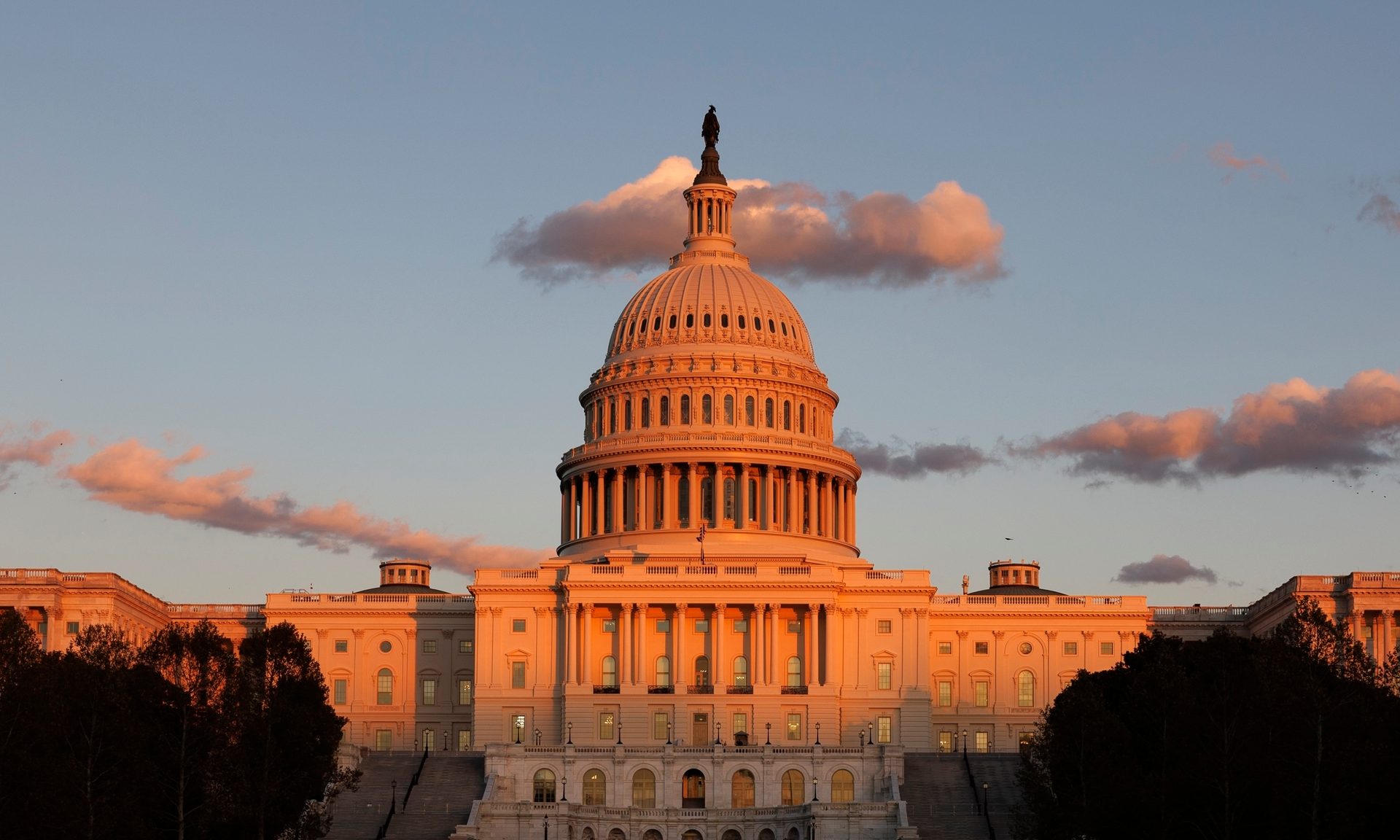 Many, or all, of the products featured on this page are from our advertising partners who compensate us when you take certain actions on our website or click to take an action on their website. However, this does not influence our evaluations. Our opinions are our own. Here is a list of [our partners](https://www.nerdwallet.com/p/our-partners) and [here's how we make money](https://www.nerdwallet.com/p/advertiser-disclosure). Updated Feb 13, 2026 9:01 p.m. PST · 8 min read Fact Checked How is this page expert verified? NerdWallet's content is fact-checked for accuracy, timeliness and relevance. It undergoes a thorough review process involving writers and editors to ensure the information is as clear and complete as possible. [More on our editorial rigor](https://www.nerdwallet.com/l/nerdwallet-editorial-guidelines) [  ](https://www.nerdwallet.com/author/anna-helhoski) Written by Anna Helhoski [  ](https://www.nerdwallet.com/author/anna-helhoski) [Anna Helhoski](https://www.nerdwallet.com/author/anna-helhoski) Senior Writer & Content Strategist [](https://twitter.com/AnnaHelhoski)[](https://www.linkedin.com/in/annahelhoski) --- 17 years of experience Expertise - Economic news and policy - Consumer trends Anna Helhoski is a senior writer covering economic news and trends in consumer finance at NerdWallet. She is an on-air contributor and producer of Money News segments for NerdWallet's Smart Money podcast. She is also an authority on student loans. She joined NerdWallet in 2014. Her work has been syndicated in news outlets nationwide including The Associated Press, The New York Times, The Washington Post, The Los Angeles Times and USA Today. She previously covered local news in the New York metro area for the Daily Voice and New York state politics for The Legislative Gazette. She holds a bachelor's degree in journalism from Purchase College, State University of New York. Published in  Senior Writer & Content Strategist + more [  ](https://www.nerdwallet.com/author/karen-gaudette-brewer) Edited by Karen Gaudette Brewer [  ](https://www.nerdwallet.com/author/karen-gaudette-brewer) [Karen Gaudette Brewer](https://www.nerdwallet.com/author/karen-gaudette-brewer) Head of Content, Core Personal Finance [](https://twitter.com/@nwfoodette)[](https://www.linkedin.com/in/karengaudette) --- 25 years of experience Expertise - Government and Public Policy - Core Personal Finance - Student Loans Karen Gaudette Brewer leads the Core Personal Finance team at NerdWallet. Previously, she guided students and their families through the ins and outs of paying for college and managing student debt on the Higher Education team. Helping people navigate complex money decisions and feel more confident brings her great joy: as the daughter of an immigrant, from an early age she was the translator of financial documents and the person who called the credit card company to fix fraud. She joined NerdWallet with 20 years of experience working in newsrooms and leading editorial teams, most recently as executive editor of HealthCentral. She launched her journalism career with The Associated Press and later worked for The (Riverside) Press-Enterprise, The Seattle Times, PCC Community Markets and Allrecipes.com. She is a graduate of the 2022 Poynter Institute Leadership Academy for Women in Media. Her writing has been honored by the Society for Features Journalism and the Society of Professional Journalists. In addition, she’s the author of two books about the Pacific Northwest. Head of Content, Core Personal Finance + more [  ](https://www.nerdwallet.com/author/rick-vanderknyff) Co-written by Rick VanderKnyff [  ](https://www.nerdwallet.com/author/rick-vanderknyff) [Rick VanderKnyff](https://www.nerdwallet.com/author/rick-vanderknyff) Senior Editor & Content Strategist [](https://www.linkedin.com/in/rvanderknyff/) --- 42 years of experience Expertise - Financial journalism - Editing - Audience engagement Rick VanderKnyff leads the news team at NerdWallet. Previously, he has worked as a channel manager at MSN.com, as a web manager at University of California San Diego, and as a copy editor and staff writer at the Los Angeles Times. He holds a Bachelor of Arts in communications and a Master of Arts in anthropology. Senior Editor & Content Strategist + more SOME CARD INFO MAY BE OUTDATED This page includes information about these cards, currently unavailable on NerdWallet. The information has been collected by NerdWallet and has not been provided or reviewed by the card issuer. Updated on Feb. 14. Shortly after midnight on Saturday, the Department of Homeland Security (DHS) shut down after lawmakers failed to reach a deal to reform Immigration and Customs Enforcement (ICE) tactics. The standoff follows a second killing of a U.S. citizen in Minneapolis by federal agents in January. Senate Democratic Leader Chuck Schumer released a statement saying that Senate Democrats would not allow a DHS bill to advance without reform measures. The deal approved on Feb. 3 does not include changes to ICE practices and procedures. Two separate deals from the White House were rejected by Democrats this week, and negotiations between lawmakers have stalled. ## What a DHS shutdown looks like Most DHS functions are considered essential, including U.S. customs and Border Patrol, ICE enforcement, Transportation Security Administration (TSA), FEMA, the Secret Service and the Coast Guard, meaning those workers would continue to report without pay. “Non-essential” support and administrative staff would be furloughed. While flights would continue, a prolonged shutdown could lead to TSA staffing shortages — as seen during the fall 2025 shutdown — which could result in flight delays and cancellations. The disruption could also create backlogs in immigration-related processing. ## What led to the DHS shutdown? DHS funding became a flashpoint following the fatal shootings of Renée Good on Jan. 7 by an ICE agent and Alex Pretti on Jan. 24 by a CBP agent, both in Minneapolis. The latest DHS shutdown follows a four-day partial shutdown that ended Feb. 3. On Jan. 30, the Senate struck a bipartisan deal that separated DHS funding from a “minibus” spending package and extended it through Feb. 13 to allow more time for negotiations. Despite the deal, the government still shut down temporarily until the House had the opportunity to vote. The House passed that stopgap on Feb. 3, reopening the government. ### Meet MoneyNerd, your weekly news decoderSo much news. So little time. NerdWallet's new weekly newsletter makes sense of the headlines that affect your wallet. SUBSCRIBE FOR FREE  On Jan. 28, Senate Democrats released their demands to reform ICE they say must be included in any DHS funding bill. The list includes ending roving patrols and requires agents to remove masks and wear visible identification and body cameras. It would also require ICE to maintain stricter requirements for conduct and use of warrants for searches and arrests. Any eventual DHS funding would add to the $75 billion for ICE approved in the One Big Beautiful Bill Act last July. » Stay informed: Check out NerdWallet's [news hub](https://www.nerdwallet.com/news) for all the latest. ## Why did the government shut down in 2025? Every year, Congress is supposed to pass 12 spending bills to keep the government’s lights on. These appropriations bills fund those programs already approved by Congress, including defense, the IRS, food assistance, veterans’ benefits and national parks. The deadline to fund programs for the next fiscal year — in this case 2025-2026 — is always Oct. 1. Without passing appropriations bills or approving a stopgap that kicks the deadline down the road, the government shuts down. Why didn’t Congress pass the funding bills? The two parties are deadlocked over Democrats’ demands to permanently extend expiring Obamacare subsidies and roll back recent Medicaid cuts in the [One Big, Beautiful Bill Act](https://www.nerdwallet.com/ "https://www.nerdwallet.com/finance/learn/one-big-beautiful-bill") (OBBBA). In the past few funding cycles, Congress has relied on multiple short-term continuing resolutions to keep the government temporarily running. ## What happened when the government shut down? On Nov. 5, the U.S. government shutdown became the longest in history. Up until that point, the longest-ever shutdown lasted 35 days. The shutdown inflicted a slew of hardships on federal workers, social benefits recipients and travelers: - Many thousands of federal workers were put on furlough while all other essential staff continued to report without pay. In the shutdown’s third week, most federal workers received partial paychecks for work through Sept. 30. - Thousands of flights were canceled after the shutdown began. On Nov. 7, [air traffic](https://www.nerdwallet.com/travel/news/faa-flight-reduction-shutdown) in 40 “high traffic” markets was reduced by 10% as many [air traffic controllers and TSA agents](https://www.nerdwallet.com/finance/news/air-traffic-controllers-government-shutdown), forced to work without pay, called out sick. Safety concerns were cited as the reason for the reduction. - Certain benefit programs, financial aid disbursements and IRS verifications were delayed. - Federal courts across the country ran out of funds, forcing them closed or running with limited operations. The Supreme Court remained open, but the building was closed to the public. SNAP funding had been set to halt on Nov. 1. But following rulings in two federal court cases, the White House agreed to partially fund SNAP, cutting payments to participants in half. ## How did the 2025 shutdown end? Trump signed a spending package on Nov. 12, ending the longest-ever government shutdown. The House of Representatives came back to the Capitol after a seven-week recess to pass a package of measures to end the shutdown on its 43rd day. The House passed the measures with a 222-209 vote on Nov. 12, largely along party lines. The Senate approved the package on Nov. 10 after enough Democrats crossed the aisle to give Republicans the 60 votes needed to pass the “minibus” package. The minibus also included three bills that fund military construction, the Department of Veterans of Affairs, the Department of Agriculture and the Food and Drug Administration (FDA) and legislative branch operations. The package fully funds Supplemental Nutrition Assistance Program ([SNAP](https://www.nerdwallet.com/finance/news/snap-government-shutdown)), a government program that provides food benefits to low-income Americans, through September 2026. The package also included a provision to rehire government employees laid off during the shutdown. Soon after the shutdown began, the White House sent notices to at least 4,100 workers in seven departments. Days later, however, a federal judge temporarily blocked the layoffs. The bill ensured the workers are not only rehired, but also receive backpay. In addition, the bill prohibits any other mass layoffs of federal workers through Jan. 30. Since the previous shutdown began on Oct. 1, the Senate had voted on — and failed to pass — a GOP-backed funding stopgap to end the shutdown 14 times. Throughout the shutdown, Democrats sought concessions on health care spending. Democrats didn’t receive their biggest demand: extended health care subsidies and rollbacks to cuts to Medicaid and Medicare that were included in the OBBBA. But there was one key inclusion in the package: a vote on Democrats’ Affordable Care Act Bill. In December, four Republicans split with their party to join Democrats to back a discharge petition on a bill to extend ACA subsidies for three years. On Jan. 8, the bill passed the House and is now with the Senate. » MORE: [How to prepare for the next government shutdown](https://www.nerdwallet.com/finance/learn/prepare-for-next-shutdown) ## How long did the 2025 government shutdown last? At 43 days, the government shutdown was the longest in history. There have been 22 shutdowns since 1976 and most are short-lived — a few hours or days, at the most. There hasn’t been a shutdown since the 2018-2019 shutdown, which lasted 35 days. The reason for that shutdown was a dispute over funding for Trump’s border wall in his first term. Before that there was a 16-day shutdown in 2013 as negotiations over the Affordable Care Act dragged on. In 1995 and 1996, two shutdowns totaled 26 days. ## What happens when the government shuts down? Federal workers bear the brunt of impact from government shutdowns. During a shutdown, there are ripple effects on delivery of government services and programs. What’s affected immediately: - National parks may close or operate without services. - Federal student aid application processing could be delayed. The shutdown coincides with the opening of the Free Application for Federal Student Aid (FAFSA). - Food and drug inspections will be delayed. - The IRS can’t verify income and Social Security numbers, which could cause delays for some mortgages and other loan approvals, as well as tax refunds. What will keep running, to a point: - Flights will still operate, but there could be delays if TSA agents and air traffic controllers, who are considered essential employees, decide to call out of work, leading to staff shortages. Even small shortages can have a big impact: During a 2019 government shutdown, the absence of just 10 air traffic controllers at two airports grounded flights and caused delays for the Eastern Seaboard. (Read more on [how the shutdown affects travel](https://www.nerdwallet.com/travel/learn/how-a-government-shutdown-could-affect-travel).) - Social Security and Medicare will keep going, but some administrative functions may be suspended, and telehealth appointments may be interrupted. - Unemployment benefits will continue — states administer compensation — but there could be application processing delays if the shutdown lasts long enough. - Food benefits through Supplemental Nutrition Assistance Program (SNAP) and the accompanying WIC program will continue — both run on contingency funds. WIC funding will only last one month, and SNAP could be strained after 30 days, as well. What won’t be affected: - The postal service — the USPS is not funded by the federal government. - Federal student loan payments — accounts are serviced by private companies. - Public schools will remain open — they’re funded by state and local governments. - Amtrak will continue operations — it is operated by a for-profit company. However, if a shutdown happens after Jan. 30, it would not impact services — like SNAP — that were fully funded through Sept. 30 by the continuing resolution. See more details on [how a government shutdown could impact you](https://www.nerdwallet.com/finance/learn/how-does-a-government-shutdown-affect-you).The shutdown has had trickle-down economic effects. One immediate and direct impact during the previous shutdown was a suspension of federal economic data. Most of that data wasn’t released during the shutdown. That’s a problem because the government’s official data releases guide the markets, the Federal Reserve and business decisions. (Photo by Tom Brenner/Getty Images News via Getty Images) **Article sources Article sources** NerdWallet writers are subject matter authorities who use primary, trustworthy sources to inform their work, including peer-reviewed studies, government websites, academic research and interviews with industry experts. All content is fact-checked for accuracy, timeliness and relevance. You can learn more about NerdWallet's high standards for journalism by reading our [editorial guidelines.](https://www.nerdwallet.com/l/nerdwallet-editorial-guidelines) Back to top About the authors [](https://www.nerdwallet.com/author/anna-helhoski) [Anna Helhoski](https://www.nerdwallet.com/author/anna-helhoski) Anna Helhoski is a senior writer/content strategist covering economic news, policy and trends. Her work has been syndicated in national news outlets including The Associated Press, The New York Times, The Washington Post and USA Today. [See full bio.](https://www.nerdwallet.com/author/anna-helhoski) [](https://twitter.com/AnnaHelhoski)[](https://www.nerdwallet.com/cdn-cgi/l/email-protection#60010e0e01200e05120417010c0c05144e030f0d)[](https://www.linkedin.com/in/annahelhoski) [](https://www.nerdwallet.com/author/rick-vanderknyff) [Rick VanderKnyff](https://www.nerdwallet.com/author/rick-vanderknyff) Rick VanderKnyff is Senior Editor, News at NerdWallet. He has worked previously at MSN.com and the Los Angeles Times. [See full bio.](https://www.nerdwallet.com/author/rick-vanderknyff) [](https://www.nerdwallet.com/cdn-cgi/l/email-protection#3e4c485f505a5b4c55504758587e505b4c5a495f52525b4a105d5153)[](https://www.linkedin.com/in/rvanderknyff/) On this page Back to top ↑ On this page ╳ - [What a DHS shutdown looks like](https://www.nerdwallet.com/finance/learn/government-shuts-down-2025#what-a-dhs-shutdown-looks-like) - [What led to the DHS shutdown?](https://www.nerdwallet.com/finance/learn/government-shuts-down-2025#what-led-to-the-dhs-shutdown) - [Why did the government shut down in 2025?](https://www.nerdwallet.com/finance/learn/government-shuts-down-2025#why-did-the-government-shut-down-in-2025) - [What happened when the government shut down?](https://www.nerdwallet.com/finance/learn/government-shuts-down-2025#what-happened-when-the-government-shut-down) - [How did the 2025 shutdown end?](https://www.nerdwallet.com/finance/learn/government-shuts-down-2025#how-did-the-2025-shutdown-end) - [How long did the 2025 government shutdown last?](https://www.nerdwallet.com/finance/learn/government-shuts-down-2025#how-long-did-the-2025-government-shutdown-last) - [What happens when the government shuts down?](https://www.nerdwallet.com/finance/learn/government-shuts-down-2025#what-happens-when-the-government-shuts-down) More like this [The Financial Glow Up](https://www.nerdwallet.com/finance/hubs/glowup)[Personal Finance News](https://www.nerdwallet.com/finance/news)[Making Money](https://www.nerdwallet.com/finance/hubs/making-money)[Paying Your Bills](https://www.nerdwallet.com/finance/hubs/paying-your-bills)[Personal Finance](https://www.nerdwallet.com/finance) Related articles [  How Is the Economy Doing Right Now?  By Anna Helhoski ](https://www.nerdwallet.com/finance/learn/state-of-the-economy) [  Trump Strikes Deal With India, Lowers Tariffs  By Anna Helhoski ](https://www.nerdwallet.com/finance/learn/tariff-news) [  How Could the DHS Shutdown Affect You?  By Anna Helhoski ](https://www.nerdwallet.com/finance/learn/how-does-a-government-shutdown-affect-you) [  Unemployment Ticks Down to 4.3%, Job Growth Flatlined in 2025  By Anna Helhoski ](https://www.nerdwallet.com/finance/learn/jobs-report-unemployment-rate)
Загрузите этот файл как /finance/learn/government-shuts-down-2025.md на ваш сервер, чтобы ИИ-агенты могли получить доступ к чистой версии вашей страницы. Вы также можете настроить согласование контента Accept: text/markdown для автоматической отдачи.
Сгенерированный llms.txt для этой отдельной страницы
# NerdWallet

> The Department of Homeland Security shut down on Feb. 14 after lawmakers failed to agree on ICE reforms following two fatal shootings in Minneapolis.

## Main
- [Department of Homeland Security Shuts Down — Now What?](https://www.nerdwallet.com/finance/learn/government-shuts-down-2025): The Department of Homeland Security shut down on Feb. 14 after lawmakers failed to agree on ICE reforms following two f…
- [Company](https://www.nerdwallet.com/company)
- [Skip to content](https://www.nerdwallet.com/)
- [Explore more credit card resources](https://www.nerdwallet.com/credit-cards)
- [Best credit cards](https://www.nerdwallet.com/credit-cards/best)
- [Best credit card bonus offers](https://www.nerdwallet.com/credit-cards/best/bonus-offers)
- [Best balance transfer credit cards](https://www.nerdwallet.com/credit-cards/best/balance-transfer)
- [Best travel credit cards](https://www.nerdwallet.com/credit-cards/best/travel)
- [Best cash back credit cards](https://www.nerdwallet.com/credit-cards/best/cash-back)
- [Best 0% APR credit cards](https://www.nerdwallet.com/credit-cards/best/zero-percent)

## Blog
- [Today's mortgage news](https://www.nerdwallet.com/mortgages/news)

## Legal
- [Business legal](https://www.nerdwallet.com/business/legal)
- [Terms of use](https://www.nerdwallet.com/p/terms-of-use)
- [Privacy policy](https://www.nerdwallet.com/p/privacy-policy)
Полный llms.txt требует анализа всего домена (скоро появится)
Загрузите этот файл по адресу https://www.nerdwallet.com/llms.txt в корень вашего домена. ИИ-агенты, такие как ChatGPT, Claude и Perplexity, проверяют этот файл для понимания структуры вашего сайта.
Семантический HTML
Has <main>
Clean heading hierarchy
26 semantic elements, 450 divs (ratio: 5%)
30/54 images with meaningful alt text
Avg div depth: 7.3, max: 20
Эффективность контента
99% token reduction (HTML→Markdown)
Content ratio: 1.2% (9781 content chars / 839115 HTML bytes)
34/1691 elements with inline styles (2.0%)
HTML size: 819KB
Обнаруживаемость ИИ
No llms.txt found
robots.txt exists
All major AI bots allowed
No sitemap found
Структурированные данные
JSON-LD found: BreadcrumbList, NewsArticle, SoftwareApplication
All OG tags present
Meta description: 149 chars
Canonical URL present
lang="en"
Доступность
Content available without JavaScript
Page size: 819KB
Main content starts at 72% of HTML
{
"url": "https://www.nerdwallet.com/finance/learn/government-shuts-down-2025",
"timestamp": 1771440412273,
"fetch": {
"mode": "simple",
"timeMs": 555,
"htmlSizeBytes": 839115,
"supportsMarkdown": false,
"markdownAgents": {
"contentNegotiation": false,
"mdUrl": {
"found": false,
"url": null
},
"linkTag": {
"found": false,
"url": null
},
"linkHeader": {
"found": false,
"url": null
},
"responseHeaders": {
"contentSignal": null,
"xMarkdownTokens": null,
"vary": null
},
"frontmatter": {
"present": false,
"fields": [],
"level": "none"
},
"level": "none"
},
"statusCode": 200
},
"extraction": {
"title": "Department of Homeland Security Shuts Down — Now What?",
"excerpt": "The Department of Homeland Security shut down on Feb. 14 after lawmakers failed to agree on ICE reforms following two fatal shootings in Minneapolis.",
"byline": "Anna Helhoski, Rick VanderKnyff",
"siteName": "NerdWallet",
"lang": "en",
"contentLength": 9781,
"metadata": {
"description": "The Department of Homeland Security shut down on Feb. 14 after lawmakers failed to agree on ICE reforms following two fatal shootings in Minneapolis.",
"ogTitle": "Department of Homeland Security Shuts Down — Now What? - NerdWallet",
"ogDescription": "The Department of Homeland Security shut down on Feb. 14 after lawmakers failed to agree on ICE reforms following two fatal shootings in Minneapolis.",
"ogImage": "https://www.nerdwallet.com/tachyon/2025/09/GettyImages-2245848775-1.jpg?resize=2400%2C1440",
"ogType": "article",
"canonical": "https://www.nerdwallet.com/finance/learn/government-shuts-down-2025",
"lang": "en",
"schemas": [
{
"@context": "https://schema.org",
"@type": "BreadcrumbList",
"itemListElement": [
{
"@type": "ListItem",
"position": 1,
"name": "Back to NerdWallet homepage",
"item": "https://www.nerdwallet.com/"
},
{
"@type": "ListItem",
"position": 2,
"name": "Finance",
"item": "https://www.nerdwallet.com/finance"
},
{
"@type": "ListItem",
"position": 3,
"name": "Department of Homeland Security Shuts Down — Now What?"
}
]
},
{
"@context": "https://schema.org",
"@type": "NewsArticle",
"@id": "https://www.nerdwallet.com/finance/learn/government-shuts-down-2025#article",
"about": [
{
"@type": "Thing",
"name": "Personal Finance"
}
],
"author": [
{
"@context": "https://schema.org",
"@type": "Person",
"image": "https://www.nerdwallet.com/tachyon/2024/02/Image-from-iOS.jpg?resize=160%2C160",
"name": "Anna Helhoski",
"sameAs": "https://www.nerdwallet.com/author/anna-helhoski",
"url": "https://www.nerdwallet.com/author/anna-helhoski",
"award": [
"SABEW’s 2023 Goldschmidt FRED fellowship"
],
"jobTitle": "Senior Writer/Content Strategist",
"description": "Anna Helhoski is a senior writer/content strategist covering economic news, policy and trends. She joined NerdWallet in 2014 and previously covered student debt. Her work has appeared in The Associated Press, The New York Times, The Washington Post and USA Today. She previously covered local news in the New York metro area for the Daily Voice and New York state politics for The Legislative Gazette. She holds a bachelor's degree in journalism from Purchase College, State University of New York. Email: <a href=\"mailto:[email protected]\">[email protected]</a>. Twitter: <a href=\"https://twitter.com/AnnaHelhoski\">@annahelhoski</a>",
"knowsAbout": [
"The economy, Federal Reserve, economic policy, student loans."
]
},
{
"@context": "https://schema.org",
"@type": "Person",
"image": "https://www.nerdwallet.com/tachyon/2019/08/rvanderknyff-user-avatar.jpg?resize=160%2C160",
"name": "Rick VanderKnyff",
"sameAs": "https://www.nerdwallet.com/author/rick-vanderknyff",
"url": "https://www.nerdwallet.com/author/rick-vanderknyff",
"jobTitle": "Senior Editor, News",
"description": "Rick VanderKnyff leads NerdWallet's news efforts. \r\n\r\nPreviously, he has worked as a channel manager at MSN.com, as a web manager at University of California San Diego, and as a copy editor and staff writer at the Los Angeles Times. He holds a Bachelor of Arts in communications and a Master of Arts in anthropology.",
"alumniOf": {
"@type": "EducationalOrganization",
"name": "California State University, Fullerton"
}
}
],
"editor": [
{
"@context": "https://schema.org",
"@type": "Person",
"image": "https://www.nerdwallet.com/tachyon/2022/12/Karen.jpeg?resize=160%2C160",
"name": "Karen Gaudette Brewer",
"url": "https://www.nerdwallet.com/author/karen-gaudette-brewer",
"award": [
"Society of Professional Journalists Northwest Excellence in Journalism Competition, Third Place, Lifestyles Writing"
],
"jobTitle": "Lead Assigning Editor, Loans",
"description": "Karen Gaudette Brewer joined NerdWallet with 20 years of experience working in newsrooms and leading editorial teams, most recently as executive editor of HealthCentral. She launched her journalism career with The Associated Press and later worked for The (Riverside) Press-Enterprise, The Seattle Times, PCC Community Markets and Allrecipes.com. Her writing has been honored by the Society for Features Journalism and the Society of Professional Journalists. She’s written two books about the Pacific Northwest.",
"sameAs": [
"https://twitter.com/@nwfoodette",
"mailto:[email protected]",
"https://www.linkedin.com/in/karengaudette"
],
"hasCredential": [
{
"@type": "EducationalOccupationalCredential",
"name": "Poynter Institute Leadership Academy for Women in Media"
}
],
"knowsAbout": [
"Higher Education, Government and Public Policy, Food and Nutrition"
],
"affiliation": {
"@type": "Organization",
"name": "Asian American Journalists Association, American Society of Journalists and Authors, Society of Business Editors and Writers"
},
"alumniOf": {
"@type": "EducationalOrganization",
"name": "University of Washington"
}
}
],
"dateModified": "2026-02-14T05:01:02.000Z",
"datePublished": "2025-10-01T04:01:11.000Z",
"headline": "Department of Homeland Security Shuts Down — Now What?",
"image": [
{
"@type": "ImageObject",
"url": "https://www.nerdwallet.com/tachyon/2025/09/GettyImages-2245848775-1.jpg?resize=350%2C350",
"width": 350,
"height": 350
},
{
"@type": "ImageObject",
"url": "https://www.nerdwallet.com/tachyon/2025/09/GettyImages-2245848775-1.jpg?resize=320%2C240",
"width": 320,
"height": 240
},
{
"@type": "ImageObject",
"url": "https://www.nerdwallet.com/tachyon/2025/09/GettyImages-2245848775-1.jpg?resize=1920%2C1080",
"width": 1920,
"height": 1080
}
],
"mainEntityOfPage": {
"@type": "WebPage",
"@id": "https://www.nerdwallet.com/finance/learn/government-shuts-down-2025",
"reviewedBy": [],
"url": "https://www.nerdwallet.com/finance/learn/government-shuts-down-2025"
},
"publisher": {
"@context": "https://schema.org",
"@id": "https://www.nerdwallet.com/#organization",
"@type": "Organization",
"name": "NerdWallet",
"legalName": "NerdWallet, Inc.",
"url": "https://www.nerdwallet.com",
"logo": {
"@type": "ImageObject",
"url": "https://www.nerdwallet.com/assets/img/nw-logos/NW-default_og-image.jpg"
},
"foundingDate": "2009",
"sameAs": [
"https://www.facebook.com/NerdWallet",
"https://twitter.com/NerdWallet",
"https://www.pinterest.com/nerdwallet",
"https://nerdwallet.tumblr.com",
"https://www.linkedin.com/company/nerdwallet",
"https://www.glassdoor.com/Overview/Working-at-NerdWallet-EI_IE687336.11,21.htm",
"https://www.instagram.com/nerdwallet",
"https://www.youtube.com/channel/UCTTYccSBNghxcxULTGaO1bA"
],
"founder": [
{
"@type": "Person",
"name": "Tim Chen"
}
],
"address": {
"@type": "PostalAddress",
"streetAddress": "4150 N Drinkwater Blvd, Suite 200",
"addressLocality": "Scottsdale",
"addressRegion": "AZ",
"postalCode": "85251",
"addressCountry": {
"@type": "Country",
"name": "US"
}
}
},
"isAccessibleForFree": true
},
{
"@context": "https://schema.org",
"@type": "SoftwareApplication",
"name": "NerdWallet",
"operatingSystem": "iOS, Android",
"applicationCategory": "Finance",
"alternativeHeadline": "Track Credit, Finance, Budget",
"aggregateRating": {
"@type": "AggregateRating",
"ratingValue": "4.832",
"reviewCount": 122197,
"bestRating": "5",
"worstRating": "1"
},
"offers": {
"@type": "Offer",
"price": "0",
"priceCurrency": "USD"
}
}
],
"robotsMeta": "index, follow, max-snippet:-1, max-image-preview:large, max-video-preview:-1",
"author": null,
"generator": null,
"markdownAlternateHref": null
}
},
"markdown": "Updated on Feb. 14.\n\nShortly after midnight on Saturday, the Department of Homeland Security (DHS) shut down after lawmakers failed to reach a deal to reform Immigration and Customs Enforcement (ICE) tactics.\n\nThe standoff follows a second killing of a U.S. citizen in Minneapolis by federal agents in January. Senate Democratic Leader Chuck Schumer released a statement saying that Senate Democrats would not allow a DHS bill to advance without reform measures. The deal approved on Feb. 3 does not include changes to ICE practices and procedures.\n\nTwo separate deals from the White House were rejected by Democrats this week, and negotiations between lawmakers have stalled.\n\n## What a DHS shutdown looks like\n\nMost DHS functions are considered essential, including U.S. customs and Border Patrol, ICE enforcement, Transportation Security Administration (TSA), FEMA, the Secret Service and the Coast Guard, meaning those workers would continue to report without pay. “Non-essential” support and administrative staff would be furloughed.\n\nWhile flights would continue, a prolonged shutdown could lead to TSA staffing shortages — as seen during the fall 2025 shutdown — which could result in flight delays and cancellations. The disruption could also create backlogs in immigration-related processing.\n\n## What led to the DHS shutdown?\n\nDHS funding became a flashpoint following the fatal shootings of Renée Good on Jan. 7 by an ICE agent and Alex Pretti on Jan. 24 by a CBP agent, both in Minneapolis.\n\nThe latest DHS shutdown follows a four-day partial shutdown that ended Feb. 3. On Jan. 30, the Senate struck a bipartisan deal that separated DHS funding from a “minibus” spending package and extended it through Feb. 13 to allow more time for negotiations. Despite the deal, the government still shut down temporarily until the House had the opportunity to vote. The House passed that stopgap on Feb. 3, reopening the government.\n\nOn Jan. 28, Senate Democrats released their demands to reform ICE they say must be included in any DHS funding bill. The list includes ending roving patrols and requires agents to remove masks and wear visible identification and body cameras. It would also require ICE to maintain stricter requirements for conduct and use of warrants for searches and arrests.\n\nAny eventual DHS funding would add to the $75 billion for ICE approved in the One Big Beautiful Bill Act last July.\n\n» Stay informed: Check out NerdWallet's [news hub](https://www.nerdwallet.com/news) for all the latest.\n\n## Why did the government shut down in 2025?\n\nEvery year, Congress is supposed to pass 12 spending bills to keep the government’s lights on. These appropriations bills fund those programs already approved by Congress, including defense, the IRS, food assistance, veterans’ benefits and national parks.\n\nThe deadline to fund programs for the next fiscal year — in this case 2025-2026 — is always Oct. 1. Without passing appropriations bills or approving a stopgap that kicks the deadline down the road, the government shuts down.\n\nWhy didn’t Congress pass the funding bills? The two parties are deadlocked over Democrats’ demands to permanently extend expiring Obamacare subsidies and roll back recent Medicaid cuts in the [One Big, Beautiful Bill Act](https://www.nerdwallet.com/ \"https://www.nerdwallet.com/finance/learn/one-big-beautiful-bill\") (OBBBA).\n\nIn the past few funding cycles, Congress has relied on multiple short-term continuing resolutions to keep the government temporarily running.\n\n## What happened when the government shut down?\n\nOn Nov. 5, the U.S. government shutdown became the longest in history. Up until that point, the longest-ever shutdown lasted 35 days. The shutdown inflicted a slew of hardships on federal workers, social benefits recipients and travelers:\n\n- Many thousands of federal workers were put on furlough while all other essential staff continued to report without pay. In the shutdown’s third week, most federal workers received partial paychecks for work through Sept. 30. \n\n- Thousands of flights were canceled after the shutdown began. On Nov. 7, [air traffic](https://www.nerdwallet.com/travel/news/faa-flight-reduction-shutdown) in 40 “high traffic” markets was reduced by 10% as many [air traffic controllers and TSA agents](https://www.nerdwallet.com/finance/news/air-traffic-controllers-government-shutdown), forced to work without pay, called out sick. Safety concerns were cited as the reason for the reduction. \n\n- Certain benefit programs, financial aid disbursements and IRS verifications were delayed. \n\n- Federal courts across the country ran out of funds, forcing them closed or running with limited operations. The Supreme Court remained open, but the building was closed to the public. \n\nSNAP funding had been set to halt on Nov. 1. But following rulings in two federal court cases, the White House agreed to partially fund SNAP, cutting payments to participants in half.\n\n## How did the 2025 shutdown end?\n\nTrump signed a spending package on Nov. 12, ending the longest-ever government shutdown.\n\nThe House of Representatives came back to the Capitol after a seven-week recess to pass a package of measures to end the shutdown on its 43rd day.\n\nThe House passed the measures with a 222-209 vote on Nov. 12, largely along party lines. The Senate approved the package on Nov. 10 after enough Democrats crossed the aisle to give Republicans the 60 votes needed to pass the “minibus” package.\n\nThe minibus also included three bills that fund military construction, the Department of Veterans of Affairs, the Department of Agriculture and the Food and Drug Administration (FDA) and legislative branch operations. The package fully funds Supplemental Nutrition Assistance Program ([SNAP](https://www.nerdwallet.com/finance/news/snap-government-shutdown)), a government program that provides food benefits to low-income Americans, through September 2026.\n\nThe package also included a provision to rehire government employees laid off during the shutdown. Soon after the shutdown began, the White House sent notices to at least 4,100 workers in seven departments. Days later, however, a federal judge temporarily blocked the layoffs. The bill ensured the workers are not only rehired, but also receive backpay. In addition, the bill prohibits any other mass layoffs of federal workers through Jan. 30.\n\nSince the previous shutdown began on Oct. 1, the Senate had voted on — and failed to pass — a GOP-backed funding stopgap to end the shutdown 14 times. Throughout the shutdown, Democrats sought concessions on health care spending.\n\nDemocrats didn’t receive their biggest demand: extended health care subsidies and rollbacks to cuts to Medicaid and Medicare that were included in the OBBBA. But there was one key inclusion in the package: a vote on Democrats’ Affordable Care Act Bill. In December, four Republicans split with their party to join Democrats to back a discharge petition on a bill to extend ACA subsidies for three years. On Jan. 8, the bill passed the House and is now with the Senate.\n\n## How long did the 2025 government shutdown last?\n\nAt 43 days, the government shutdown was the longest in history. There have been 22 shutdowns since 1976 and most are short-lived — a few hours or days, at the most.\n\nThere hasn’t been a shutdown since the 2018-2019 shutdown, which lasted 35 days. The reason for that shutdown was a dispute over funding for Trump’s border wall in his first term.\n\nBefore that there was a 16-day shutdown in 2013 as negotiations over the Affordable Care Act dragged on. In 1995 and 1996, two shutdowns totaled 26 days.\n\n## What happens when the government shuts down?\n\nFederal workers bear the brunt of impact from government shutdowns.\n\nDuring a shutdown, there are ripple effects on delivery of government services and programs.\n\nWhat’s affected immediately:\n\n- National parks may close or operate without services. \n\n- Federal student aid application processing could be delayed. The shutdown coincides with the opening of the Free Application for Federal Student Aid (FAFSA). \n\n- Food and drug inspections will be delayed. \n\n- The IRS can’t verify income and Social Security numbers, which could cause delays for some mortgages and other loan approvals, as well as tax refunds. \n\nWhat will keep running, to a point:\n\n- Flights will still operate, but there could be delays if TSA agents and air traffic controllers, who are considered essential employees, decide to call out of work, leading to staff shortages. Even small shortages can have a big impact: During a 2019 government shutdown, the absence of just 10 air traffic controllers at two airports grounded flights and caused delays for the Eastern Seaboard. (Read more on [how the shutdown affects travel](https://www.nerdwallet.com/travel/learn/how-a-government-shutdown-could-affect-travel).)\n\n- Social Security and Medicare will keep going, but some administrative functions may be suspended, and telehealth appointments may be interrupted. \n\n- Unemployment benefits will continue — states administer compensation — but there could be application processing delays if the shutdown lasts long enough. \n\n- Food benefits through Supplemental Nutrition Assistance Program (SNAP) and the accompanying WIC program will continue — both run on contingency funds. WIC funding will only last one month, and SNAP could be strained after 30 days, as well. \n\nWhat won’t be affected:\n\n- The postal service — the USPS is not funded by the federal government. \n\n- Federal student loan payments — accounts are serviced by private companies. \n\n- Public schools will remain open — they’re funded by state and local governments. \n\n- Amtrak will continue operations — it is operated by a for-profit company.\n\nHowever, if a shutdown happens after Jan. 30, it would not impact services — like SNAP — that were fully funded through Sept. 30 by the continuing resolution.\n\nSee more details on [how a government shutdown could impact you](https://www.nerdwallet.com/finance/learn/how-does-a-government-shutdown-affect-you).The shutdown has had trickle-down economic effects. One immediate and direct impact during the previous shutdown was a suspension of federal economic data. Most of that data wasn’t released during the shutdown. That’s a problem because the government’s official data releases guide the markets, the Federal Reserve and business decisions.\n\n(Photo by Tom Brenner/Getty Images News via Getty Images)\n",
"fullPageMarkdown": "Department of Homeland Security Shuts Down — Now What? - NerdWallet\n\n[Skip to content](https://www.nerdwallet.com/finance/learn/government-shuts-down-2025#main)[](https://www.nerdwallet.com/)\n\n\n\n\n\nSearch\n\n\n\n[Sign In](https://www.nerdwallet.com/api/nts/v1/login?redirectTo=https%3A%2F%2Fwww.nerdwallet.com&initialScreen=signin)[JoinSign Up](https://www.nerdwallet.com/api/nts/v1/login?redirectTo=https%3A%2F%2Fwww.nerdwallet.com&initialScreen=signup)\n\n\n\n\n\nMy NerdWallet\n\n\n\nAdvertiser disclosure\n\n### You're our first priority.\nEvery time.\n\nWe believe everyone should be able to make financial decisions with confidence. While we don't cover every company or financial product on the market, we work hard to share a wide range of offers and objective editorial perspectives.\n\nSo how do we make money? Our partners compensate us for advertisements that appear on our site. This compensation helps us provide tools and services - like free credit score access and monitoring. With the exception of mortgage, home equity and other home-lending products or services, partner compensation is one of several factors that may affect which products we highlight and where they appear on our site. Other factors include your credit profile, product availability and proprietary website methodologies.\n\nHowever, these factors **do not influence our editors' opinions or ratings**, which are based on independent research and analysis. Our partners cannot pay us to guarantee favorable reviews. [Here is a list of our partners](https://www.nerdwallet.com/p/our-partners).\n\n# Department of Homeland Security Shuts Down — Now What?\n\nDemocrats are blocking DHS funding pending ICE reforms.\n\n\n\nMany, or all, of the products featured on this page are from our advertising partners who compensate us when you take certain actions on our website or click to take an action on their website. However, this does not influence our evaluations. Our opinions are our own. Here is a list of [our partners](https://www.nerdwallet.com/p/our-partners) and [here's how we make money](https://www.nerdwallet.com/p/advertiser-disclosure).\n\nUpdated Feb 13, 2026 9:01 p.m. PST · 8 min read\n\nFact Checked\n\nHow is this page expert verified?\n\nNerdWallet's content is fact-checked for accuracy, timeliness and relevance. It undergoes a thorough review process involving writers and editors to ensure the information is as clear and complete as possible.\n\n[More on our editorial rigor](https://www.nerdwallet.com/l/nerdwallet-editorial-guidelines)\n\n[\n\n\n\n](https://www.nerdwallet.com/author/anna-helhoski)\n\nWritten by Anna Helhoski\n\n[\n\n\n\n](https://www.nerdwallet.com/author/anna-helhoski)\n\n[Anna Helhoski](https://www.nerdwallet.com/author/anna-helhoski)\n\nSenior Writer & Content Strategist\n\n[](https://twitter.com/AnnaHelhoski)[](https://www.linkedin.com/in/annahelhoski)\n\n---\n\n17 years of experience\n\nExpertise\n\n- Economic news and policy\n- Consumer trends\n\nAnna Helhoski is a senior writer covering economic news and trends in consumer finance at NerdWallet. She is an on-air contributor and producer of Money News segments for NerdWallet's Smart Money podcast. She is also an authority on student loans. She joined NerdWallet in 2014. Her work has been syndicated in news outlets nationwide including The Associated Press, The New York Times, The Washington Post, The Los Angeles Times and USA Today. She previously covered local news in the New York metro area for the Daily Voice and New York state politics for The Legislative Gazette. She holds a bachelor's degree in journalism from Purchase College, State University of New York.\n\nPublished in \n\nSenior Writer & Content Strategist\n\n+ more \n\n[\n\n\n\n](https://www.nerdwallet.com/author/karen-gaudette-brewer)\n\nEdited by Karen Gaudette Brewer\n\n[\n\n\n\n](https://www.nerdwallet.com/author/karen-gaudette-brewer)\n\n[Karen Gaudette Brewer](https://www.nerdwallet.com/author/karen-gaudette-brewer)\n\nHead of Content, Core Personal Finance\n\n[](https://twitter.com/@nwfoodette)[](https://www.linkedin.com/in/karengaudette)\n\n---\n\n25 years of experience\n\nExpertise\n\n- Government and Public Policy\n- Core Personal Finance\n- Student Loans\n\nKaren Gaudette Brewer leads the Core Personal Finance team at NerdWallet. Previously, she guided students and their families through the ins and outs of paying for college and managing student debt on the Higher Education team. Helping people navigate complex money decisions and feel more confident brings her great joy: as the daughter of an immigrant, from an early age she was the translator of financial documents and the person who called the credit card company to fix fraud.\n\nShe joined NerdWallet with 20 years of experience working in newsrooms and leading editorial teams, most recently as executive editor of HealthCentral. She launched her journalism career with The Associated Press and later worked for The (Riverside) Press-Enterprise, The Seattle Times, PCC Community Markets and Allrecipes.com.\n\nShe is a graduate of the 2022 Poynter Institute Leadership Academy for Women in Media. Her writing has been honored by the Society for Features Journalism and the Society of Professional Journalists. In addition, she’s the author of two books about the Pacific Northwest.\n\nHead of Content, Core Personal Finance\n\n+ more \n\n[\n\n\n\n](https://www.nerdwallet.com/author/rick-vanderknyff)\n\nCo-written by Rick VanderKnyff\n\n[\n\n\n\n](https://www.nerdwallet.com/author/rick-vanderknyff)\n\n[Rick VanderKnyff](https://www.nerdwallet.com/author/rick-vanderknyff)\n\nSenior Editor & Content Strategist\n\n[](https://www.linkedin.com/in/rvanderknyff/)\n\n---\n\n42 years of experience\n\nExpertise\n\n- Financial journalism\n- Editing\n- Audience engagement\n\nRick VanderKnyff leads the news team at NerdWallet. Previously, he has worked as a channel manager at MSN.com, as a web manager at University of California San Diego, and as a copy editor and staff writer at the Los Angeles Times. He holds a Bachelor of Arts in communications and a Master of Arts in anthropology.\n\nSenior Editor & Content Strategist\n\n+ more \n\nSOME CARD INFO MAY BE OUTDATED\n\nThis page includes information about these cards, currently unavailable on NerdWallet. The information has been collected by NerdWallet and has not been provided or reviewed by the card issuer.\n\nUpdated on Feb. 14.\n\nShortly after midnight on Saturday, the Department of Homeland Security (DHS) shut down after lawmakers failed to reach a deal to reform Immigration and Customs Enforcement (ICE) tactics.\n\nThe standoff follows a second killing of a U.S. citizen in Minneapolis by federal agents in January. Senate Democratic Leader Chuck Schumer released a statement saying that Senate Democrats would not allow a DHS bill to advance without reform measures. The deal approved on Feb. 3 does not include changes to ICE practices and procedures.\n\nTwo separate deals from the White House were rejected by Democrats this week, and negotiations between lawmakers have stalled.\n\n## What a DHS shutdown looks like\n\nMost DHS functions are considered essential, including U.S. customs and Border Patrol, ICE enforcement, Transportation Security Administration (TSA), FEMA, the Secret Service and the Coast Guard, meaning those workers would continue to report without pay. “Non-essential” support and administrative staff would be furloughed.\n\nWhile flights would continue, a prolonged shutdown could lead to TSA staffing shortages — as seen during the fall 2025 shutdown — which could result in flight delays and cancellations. The disruption could also create backlogs in immigration-related processing.\n\n## What led to the DHS shutdown?\n\nDHS funding became a flashpoint following the fatal shootings of Renée Good on Jan. 7 by an ICE agent and Alex Pretti on Jan. 24 by a CBP agent, both in Minneapolis.\n\nThe latest DHS shutdown follows a four-day partial shutdown that ended Feb. 3. On Jan. 30, the Senate struck a bipartisan deal that separated DHS funding from a “minibus” spending package and extended it through Feb. 13 to allow more time for negotiations. Despite the deal, the government still shut down temporarily until the House had the opportunity to vote. The House passed that stopgap on Feb. 3, reopening the government.\n\n### Meet MoneyNerd, your weekly news decoderSo much news. So little time. NerdWallet's new weekly newsletter makes sense of the headlines that affect your wallet.\n\nSUBSCRIBE FOR FREE\n\n\n\nOn Jan. 28, Senate Democrats released their demands to reform ICE they say must be included in any DHS funding bill. The list includes ending roving patrols and requires agents to remove masks and wear visible identification and body cameras. It would also require ICE to maintain stricter requirements for conduct and use of warrants for searches and arrests.\n\nAny eventual DHS funding would add to the $75 billion for ICE approved in the One Big Beautiful Bill Act last July.\n\n» Stay informed: Check out NerdWallet's [news hub](https://www.nerdwallet.com/news) for all the latest.\n\n## Why did the government shut down in 2025?\n\nEvery year, Congress is supposed to pass 12 spending bills to keep the government’s lights on. These appropriations bills fund those programs already approved by Congress, including defense, the IRS, food assistance, veterans’ benefits and national parks.\n\nThe deadline to fund programs for the next fiscal year — in this case 2025-2026 — is always Oct. 1. Without passing appropriations bills or approving a stopgap that kicks the deadline down the road, the government shuts down.\n\nWhy didn’t Congress pass the funding bills? The two parties are deadlocked over Democrats’ demands to permanently extend expiring Obamacare subsidies and roll back recent Medicaid cuts in the [One Big, Beautiful Bill Act](https://www.nerdwallet.com/ \"https://www.nerdwallet.com/finance/learn/one-big-beautiful-bill\") (OBBBA).\n\nIn the past few funding cycles, Congress has relied on multiple short-term continuing resolutions to keep the government temporarily running.\n\n## What happened when the government shut down?\n\nOn Nov. 5, the U.S. government shutdown became the longest in history. Up until that point, the longest-ever shutdown lasted 35 days. The shutdown inflicted a slew of hardships on federal workers, social benefits recipients and travelers:\n\n- Many thousands of federal workers were put on furlough while all other essential staff continued to report without pay. In the shutdown’s third week, most federal workers received partial paychecks for work through Sept. 30. \n\n- Thousands of flights were canceled after the shutdown began. On Nov. 7, [air traffic](https://www.nerdwallet.com/travel/news/faa-flight-reduction-shutdown) in 40 “high traffic” markets was reduced by 10% as many [air traffic controllers and TSA agents](https://www.nerdwallet.com/finance/news/air-traffic-controllers-government-shutdown), forced to work without pay, called out sick. Safety concerns were cited as the reason for the reduction. \n\n- Certain benefit programs, financial aid disbursements and IRS verifications were delayed. \n\n- Federal courts across the country ran out of funds, forcing them closed or running with limited operations. The Supreme Court remained open, but the building was closed to the public. \n\nSNAP funding had been set to halt on Nov. 1. But following rulings in two federal court cases, the White House agreed to partially fund SNAP, cutting payments to participants in half.\n\n## How did the 2025 shutdown end?\n\nTrump signed a spending package on Nov. 12, ending the longest-ever government shutdown.\n\nThe House of Representatives came back to the Capitol after a seven-week recess to pass a package of measures to end the shutdown on its 43rd day.\n\nThe House passed the measures with a 222-209 vote on Nov. 12, largely along party lines. The Senate approved the package on Nov. 10 after enough Democrats crossed the aisle to give Republicans the 60 votes needed to pass the “minibus” package.\n\nThe minibus also included three bills that fund military construction, the Department of Veterans of Affairs, the Department of Agriculture and the Food and Drug Administration (FDA) and legislative branch operations. The package fully funds Supplemental Nutrition Assistance Program ([SNAP](https://www.nerdwallet.com/finance/news/snap-government-shutdown)), a government program that provides food benefits to low-income Americans, through September 2026.\n\nThe package also included a provision to rehire government employees laid off during the shutdown. Soon after the shutdown began, the White House sent notices to at least 4,100 workers in seven departments. Days later, however, a federal judge temporarily blocked the layoffs. The bill ensured the workers are not only rehired, but also receive backpay. In addition, the bill prohibits any other mass layoffs of federal workers through Jan. 30.\n\nSince the previous shutdown began on Oct. 1, the Senate had voted on — and failed to pass — a GOP-backed funding stopgap to end the shutdown 14 times. Throughout the shutdown, Democrats sought concessions on health care spending.\n\nDemocrats didn’t receive their biggest demand: extended health care subsidies and rollbacks to cuts to Medicaid and Medicare that were included in the OBBBA. But there was one key inclusion in the package: a vote on Democrats’ Affordable Care Act Bill. In December, four Republicans split with their party to join Democrats to back a discharge petition on a bill to extend ACA subsidies for three years. On Jan. 8, the bill passed the House and is now with the Senate.\n\n» MORE: [How to prepare for the next government shutdown](https://www.nerdwallet.com/finance/learn/prepare-for-next-shutdown)\n\n## How long did the 2025 government shutdown last?\n\nAt 43 days, the government shutdown was the longest in history. There have been 22 shutdowns since 1976 and most are short-lived — a few hours or days, at the most.\n\nThere hasn’t been a shutdown since the 2018-2019 shutdown, which lasted 35 days. The reason for that shutdown was a dispute over funding for Trump’s border wall in his first term.\n\nBefore that there was a 16-day shutdown in 2013 as negotiations over the Affordable Care Act dragged on. In 1995 and 1996, two shutdowns totaled 26 days.\n\n## What happens when the government shuts down?\n\nFederal workers bear the brunt of impact from government shutdowns.\n\nDuring a shutdown, there are ripple effects on delivery of government services and programs.\n\nWhat’s affected immediately:\n\n- National parks may close or operate without services. \n\n- Federal student aid application processing could be delayed. The shutdown coincides with the opening of the Free Application for Federal Student Aid (FAFSA). \n\n- Food and drug inspections will be delayed. \n\n- The IRS can’t verify income and Social Security numbers, which could cause delays for some mortgages and other loan approvals, as well as tax refunds. \n\nWhat will keep running, to a point:\n\n- Flights will still operate, but there could be delays if TSA agents and air traffic controllers, who are considered essential employees, decide to call out of work, leading to staff shortages. Even small shortages can have a big impact: During a 2019 government shutdown, the absence of just 10 air traffic controllers at two airports grounded flights and caused delays for the Eastern Seaboard. (Read more on [how the shutdown affects travel](https://www.nerdwallet.com/travel/learn/how-a-government-shutdown-could-affect-travel).)\n\n- Social Security and Medicare will keep going, but some administrative functions may be suspended, and telehealth appointments may be interrupted. \n\n- Unemployment benefits will continue — states administer compensation — but there could be application processing delays if the shutdown lasts long enough. \n\n- Food benefits through Supplemental Nutrition Assistance Program (SNAP) and the accompanying WIC program will continue — both run on contingency funds. WIC funding will only last one month, and SNAP could be strained after 30 days, as well. \n\nWhat won’t be affected:\n\n- The postal service — the USPS is not funded by the federal government. \n\n- Federal student loan payments — accounts are serviced by private companies. \n\n- Public schools will remain open — they’re funded by state and local governments. \n\n- Amtrak will continue operations — it is operated by a for-profit company.\n\nHowever, if a shutdown happens after Jan. 30, it would not impact services — like SNAP — that were fully funded through Sept. 30 by the continuing resolution.\n\nSee more details on [how a government shutdown could impact you](https://www.nerdwallet.com/finance/learn/how-does-a-government-shutdown-affect-you).The shutdown has had trickle-down economic effects. One immediate and direct impact during the previous shutdown was a suspension of federal economic data. Most of that data wasn’t released during the shutdown. That’s a problem because the government’s official data releases guide the markets, the Federal Reserve and business decisions.\n\n(Photo by Tom Brenner/Getty Images News via Getty Images)\n\n**Article sources Article sources**\n\nNerdWallet writers are subject matter authorities who use primary, trustworthy sources to inform their work, including peer-reviewed studies, government websites, academic research and interviews with industry experts. All content is fact-checked for accuracy, timeliness and relevance. You can learn more about NerdWallet's high standards for journalism by reading our [editorial guidelines.](https://www.nerdwallet.com/l/nerdwallet-editorial-guidelines)\n\nBack to top\n\nAbout the authors\n\n[](https://www.nerdwallet.com/author/anna-helhoski)\n\n[Anna Helhoski](https://www.nerdwallet.com/author/anna-helhoski) Anna Helhoski is a senior writer/content strategist covering economic news, policy and trends. Her work has been syndicated in national news outlets including The Associated Press, The New York Times, The Washington Post and USA Today. [See full bio.](https://www.nerdwallet.com/author/anna-helhoski)\n\n[](https://twitter.com/AnnaHelhoski)[](https://www.nerdwallet.com/cdn-cgi/l/email-protection#60010e0e01200e05120417010c0c05144e030f0d)[](https://www.linkedin.com/in/annahelhoski)\n\n[](https://www.nerdwallet.com/author/rick-vanderknyff)\n\n[Rick VanderKnyff](https://www.nerdwallet.com/author/rick-vanderknyff) Rick VanderKnyff is Senior Editor, News at NerdWallet. He has worked previously at MSN.com and the Los Angeles Times. [See full bio.](https://www.nerdwallet.com/author/rick-vanderknyff)\n\n[](https://www.nerdwallet.com/cdn-cgi/l/email-protection#3e4c485f505a5b4c55504758587e505b4c5a495f52525b4a105d5153)[](https://www.linkedin.com/in/rvanderknyff/)\n\nOn this page Back to top ↑\n\nOn this page\n\n╳\n\n- [What a DHS shutdown looks like](https://www.nerdwallet.com/finance/learn/government-shuts-down-2025#what-a-dhs-shutdown-looks-like)\n- [What led to the DHS shutdown?](https://www.nerdwallet.com/finance/learn/government-shuts-down-2025#what-led-to-the-dhs-shutdown)\n- [Why did the government shut down in 2025?](https://www.nerdwallet.com/finance/learn/government-shuts-down-2025#why-did-the-government-shut-down-in-2025)\n- [What happened when the government shut down?](https://www.nerdwallet.com/finance/learn/government-shuts-down-2025#what-happened-when-the-government-shut-down)\n- [How did the 2025 shutdown end?](https://www.nerdwallet.com/finance/learn/government-shuts-down-2025#how-did-the-2025-shutdown-end)\n- [How long did the 2025 government shutdown last?](https://www.nerdwallet.com/finance/learn/government-shuts-down-2025#how-long-did-the-2025-government-shutdown-last)\n- [What happens when the government shuts down?](https://www.nerdwallet.com/finance/learn/government-shuts-down-2025#what-happens-when-the-government-shuts-down)\n\nMore like this\n\n[The Financial Glow Up](https://www.nerdwallet.com/finance/hubs/glowup)[Personal Finance News](https://www.nerdwallet.com/finance/news)[Making Money](https://www.nerdwallet.com/finance/hubs/making-money)[Paying Your Bills](https://www.nerdwallet.com/finance/hubs/paying-your-bills)[Personal Finance](https://www.nerdwallet.com/finance)\n\nRelated articles\n\n[\n\n\n\nHow Is the Economy Doing Right Now?\n\n\n\nBy Anna Helhoski\n\n](https://www.nerdwallet.com/finance/learn/state-of-the-economy)\n\n[\n\n\n\nTrump Strikes Deal With India, Lowers Tariffs\n\n\n\nBy Anna Helhoski\n\n](https://www.nerdwallet.com/finance/learn/tariff-news)\n\n[\n\n\n\nHow Could the DHS Shutdown Affect You?\n\n\n\nBy Anna Helhoski\n\n](https://www.nerdwallet.com/finance/learn/how-does-a-government-shutdown-affect-you)\n\n[\n\n\n\nUnemployment Ticks Down to 4.3%, Job Growth Flatlined in 2025\n\n\n\nBy Anna Helhoski\n\n](https://www.nerdwallet.com/finance/learn/jobs-report-unemployment-rate)\n",
"markdownStats": {
"images": 0,
"links": 7,
"tables": 0,
"codeBlocks": 0,
"headings": 7
},
"tokens": {
"htmlTokens": 307732,
"markdownTokens": 2180,
"reduction": 305552,
"reductionPercent": 99
},
"score": {
"score": 57,
"grade": "D",
"dimensions": {
"semanticHtml": {
"score": 72,
"weight": 20,
"grade": "C",
"checks": {
"uses_article_or_main": {
"score": 100,
"weight": 20,
"details": "Has <main>"
},
"proper_heading_hierarchy": {
"score": 100,
"weight": 25,
"details": "Clean heading hierarchy"
},
"semantic_elements": {
"score": 18,
"weight": 20,
"details": "26 semantic elements, 450 divs (ratio: 5%)"
},
"meaningful_alt_texts": {
"score": 56,
"weight": 15,
"details": "30/54 images with meaningful alt text"
},
"low_div_nesting": {
"score": 77,
"weight": 20,
"details": "Avg div depth: 7.3, max: 20"
}
}
},
"contentEfficiency": {
"score": 51,
"weight": 25,
"grade": "D",
"checks": {
"token_reduction_ratio": {
"score": 100,
"weight": 40,
"details": "99% token reduction (HTML→Markdown)"
},
"content_to_noise_ratio": {
"score": 0,
"weight": 30,
"details": "Content ratio: 1.2% (9781 content chars / 839115 HTML bytes)"
},
"minimal_inline_styles": {
"score": 50,
"weight": 15,
"details": "34/1691 elements with inline styles (2.0%)"
},
"reasonable_page_weight": {
"score": 20,
"weight": 15,
"details": "HTML size: 819KB"
}
}
},
"aiDiscoverability": {
"score": 25,
"weight": 25,
"grade": "F",
"checks": {
"has_llms_txt": {
"score": 0,
"weight": 20,
"details": "No llms.txt found"
},
"has_robots_txt": {
"score": 100,
"weight": 10,
"details": "robots.txt exists"
},
"robots_allows_ai_bots": {
"score": 100,
"weight": 15,
"details": "All major AI bots allowed"
},
"has_sitemap": {
"score": 0,
"weight": 10,
"details": "No sitemap found"
},
"supports_markdown_negotiation": {
"score": 0,
"weight": 25,
"details": "No Markdown for Agents support detected"
},
"has_content_signals": {
"score": 0,
"weight": 20,
"details": "No Content-Signal found (robots.txt or HTTP headers)"
}
}
},
"structuredData": {
"score": 100,
"weight": 15,
"grade": "A",
"checks": {
"has_schema_org": {
"score": 100,
"weight": 30,
"details": "JSON-LD found: BreadcrumbList, NewsArticle, SoftwareApplication"
},
"has_open_graph": {
"score": 100,
"weight": 25,
"details": "All OG tags present"
},
"has_meta_description": {
"score": 100,
"weight": 20,
"details": "Meta description: 149 chars"
},
"has_canonical_url": {
"score": 100,
"weight": 15,
"details": "Canonical URL present"
},
"has_lang_attribute": {
"score": 100,
"weight": 10,
"details": "lang=\"en\""
}
}
},
"accessibility": {
"score": 60,
"weight": 15,
"grade": "C",
"checks": {
"content_without_js": {
"score": 100,
"weight": 40,
"details": "Content available without JavaScript"
},
"reasonable_page_size": {
"score": 40,
"weight": 30,
"details": "Page size: 819KB"
},
"fast_content_position": {
"score": 25,
"weight": 30,
"details": "Main content starts at 72% of HTML"
}
}
}
}
},
"recommendations": [
{
"id": "add_llms_txt",
"priority": "critical",
"category": "aiDiscoverability",
"titleKey": "rec.add_llms_txt.title",
"descriptionKey": "rec.add_llms_txt.description",
"howToKey": "rec.add_llms_txt.howto",
"effort": "quick-win",
"estimatedImpact": 10,
"checkScore": 0,
"checkDetails": "No llms.txt found"
},
{
"id": "improve_content_ratio",
"priority": "critical",
"category": "contentEfficiency",
"titleKey": "rec.improve_content_ratio.title",
"descriptionKey": "rec.improve_content_ratio.description",
"howToKey": "rec.improve_content_ratio.howto",
"effort": "moderate",
"estimatedImpact": 6,
"checkScore": 0,
"checkDetails": "Content ratio: 1.2% (9781 content chars / 839115 HTML bytes)"
},
{
"id": "add_markdown_negotiation",
"priority": "critical",
"category": "aiDiscoverability",
"titleKey": "rec.add_markdown_negotiation.title",
"descriptionKey": "rec.add_markdown_negotiation.description",
"howToKey": "rec.add_markdown_negotiation.howto",
"effort": "significant",
"estimatedImpact": 6,
"checkScore": 0,
"checkDetails": "No Markdown for Agents support detected"
},
{
"id": "add_sitemap",
"priority": "critical",
"category": "aiDiscoverability",
"titleKey": "rec.add_sitemap.title",
"descriptionKey": "rec.add_sitemap.description",
"howToKey": "rec.add_sitemap.howto",
"effort": "quick-win",
"estimatedImpact": 5,
"checkScore": 0,
"checkDetails": "No sitemap found"
},
{
"id": "add_content_signals",
"priority": "critical",
"category": "aiDiscoverability",
"titleKey": "rec.add_content_signals.title",
"descriptionKey": "rec.add_content_signals.description",
"howToKey": "rec.add_content_signals.howto",
"effort": "quick-win",
"estimatedImpact": 5,
"checkScore": 0,
"checkDetails": "No Content-Signal found (robots.txt or HTTP headers)"
},
{
"id": "add_semantic_elements",
"priority": "high",
"category": "semanticHtml",
"titleKey": "rec.add_semantic_elements.title",
"descriptionKey": "rec.add_semantic_elements.description",
"howToKey": "rec.add_semantic_elements.howto",
"effort": "moderate",
"estimatedImpact": 5,
"checkScore": 18,
"checkDetails": "26 semantic elements, 450 divs (ratio: 5%)"
},
{
"id": "reduce_page_size",
"priority": "high",
"category": "accessibility",
"titleKey": "rec.reduce_page_size.title",
"descriptionKey": "rec.reduce_page_size.description",
"howToKey": "rec.reduce_page_size.howto",
"effort": "moderate",
"estimatedImpact": 4,
"checkScore": 40,
"checkDetails": "Page size: 819KB"
},
{
"id": "move_content_earlier",
"priority": "high",
"category": "accessibility",
"titleKey": "rec.move_content_earlier.title",
"descriptionKey": "rec.move_content_earlier.description",
"howToKey": "rec.move_content_earlier.howto",
"effort": "moderate",
"estimatedImpact": 4,
"checkScore": 25,
"checkDetails": "Main content starts at 72% of HTML"
},
{
"id": "reduce_page_weight",
"priority": "high",
"category": "contentEfficiency",
"titleKey": "rec.reduce_page_weight.title",
"descriptionKey": "rec.reduce_page_weight.description",
"howToKey": "rec.reduce_page_weight.howto",
"effort": "significant",
"estimatedImpact": 4,
"checkScore": 20,
"checkDetails": "HTML size: 819KB"
},
{
"id": "improve_alt_texts",
"priority": "medium",
"category": "semanticHtml",
"titleKey": "rec.improve_alt_texts.title",
"descriptionKey": "rec.improve_alt_texts.description",
"howToKey": "rec.improve_alt_texts.howto",
"effort": "moderate",
"estimatedImpact": 4,
"checkScore": 56,
"checkDetails": "30/54 images with meaningful alt text"
}
],
"llmsTxtPreview": "# NerdWallet\n\n> The Department of Homeland Security shut down on Feb. 14 after lawmakers failed to agree on ICE reforms following two fatal shootings in Minneapolis.\n\n## Main\n- [Department of Homeland Security Shuts Down — Now What?](https://www.nerdwallet.com/finance/learn/government-shuts-down-2025): The Department of Homeland Security shut down on Feb. 14 after lawmakers failed to agree on ICE reforms following two f…\n- [Company](https://www.nerdwallet.com/company)\n- [Skip to content](https://www.nerdwallet.com/)\n- [Explore more credit card resources](https://www.nerdwallet.com/credit-cards)\n- [Best credit cards](https://www.nerdwallet.com/credit-cards/best)\n- [Best credit card bonus offers](https://www.nerdwallet.com/credit-cards/best/bonus-offers)\n- [Best balance transfer credit cards](https://www.nerdwallet.com/credit-cards/best/balance-transfer)\n- [Best travel credit cards](https://www.nerdwallet.com/credit-cards/best/travel)\n- [Best cash back credit cards](https://www.nerdwallet.com/credit-cards/best/cash-back)\n- [Best 0% APR credit cards](https://www.nerdwallet.com/credit-cards/best/zero-percent)\n\n## Blog\n- [Today's mortgage news](https://www.nerdwallet.com/mortgages/news)\n\n## Legal\n- [Business legal](https://www.nerdwallet.com/business/legal)\n- [Terms of use](https://www.nerdwallet.com/p/terms-of-use)\n- [Privacy policy](https://www.nerdwallet.com/p/privacy-policy)\n\n",
"llmsTxtExisting": null,
"snippets": [
{
"id": "add_llms_txt",
"title": "Create /llms.txt",
"description": "Upload this file to your web root. It tells AI agents what your site is about and which pages matter.",
"language": "markdown",
"code": "# NerdWallet\n\n> The Department of Homeland Security shut down on Feb. 14 after lawmakers failed to agree on ICE reforms following two fatal shootings in Minneapolis.\n\n## Main\n- [Department of Homeland Security Shuts Down — Now What?](https://www.nerdwallet.com/finance/learn/government-shuts-down-2025): The Department of Homeland Security shut down on Feb. 14 after lawmakers failed to agree on ICE reforms following two f…\n- [Company](https://www.nerdwallet.com/company)\n- [Skip to content](https://www.nerdwallet.com/)\n- [Explore more credit card resources](https://www.nerdwallet.com/credit-cards)\n- [Best credit cards](https://www.nerdwallet.com/credit-cards/best)\n- [Best credit card bonus offers](https://www.nerdwallet.com/credit-cards/best/bonus-offers)\n- [Best balance transfer credit cards](https://www.nerdwallet.com/credit-cards/best/balance-transfer)\n- [Best travel credit cards](https://www.nerdwallet.com/credit-cards/best/travel)\n- [Best cash back credit cards](https://www.nerdwallet.com/credit-cards/best/cash-back)\n- [Best 0% APR credit cards](https://www.nerdwallet.com/credit-cards/best/zero-percent)\n\n## Blog\n- [Today's mortgage news](https://www.nerdwallet.com/mortgages/news)\n\n## Legal\n- [Business legal](https://www.nerdwallet.com/business/legal)\n- [Terms of use](https://www.nerdwallet.com/p/terms-of-use)\n- [Privacy policy](https://www.nerdwallet.com/p/privacy-policy)\n\n",
"filename": "/llms.txt"
},
{
"id": "add_sitemap",
"title": "Create /sitemap.xml",
"description": "A sitemap helps AI agents discover all your pages. Most CMS platforms generate one automatically.",
"language": "xml",
"code": "<?xml version=\"1.0\" encoding=\"UTF-8\"?>\n<urlset xmlns=\"http://www.sitemaps.org/schemas/sitemap/0.9\">\n <url>\n <loc>https://www.nerdwallet.com/finance/learn/government-shuts-down-2025</loc>\n <lastmod>2026-02-18</lastmod>\n </url>\n</urlset>",
"filename": "/sitemap.xml"
},
{
"id": "add_content_signals",
"title": "Add Content-Signal directives",
"description": "Content-Signal tells AI agents how they may use your content. The recommended location is robots.txt, but you can also add it as an HTTP header.",
"language": "txt",
"code": "# robots.txt (recommended, canonical location):\nUser-agent: *\nContent-Signal: search=yes, ai-input=yes, ai-train=no\n\n# Nginx — add to server block (optional, for HTTP header):\n# add_header Content-Signal \"search=yes, ai-input=yes, ai-train=no\" always;\n\n# Apache — add to .htaccess (optional, for HTTP header):\n# Header set Content-Signal \"search=yes, ai-input=yes, ai-train=no\"",
"filename": "/robots.txt"
},
{
"id": "add_markdown_negotiation",
"title": "Support Markdown for Agents",
"description": "Implement one or more of the 4 Markdown for Agents mechanisms to let AI agents request content in markdown format.",
"language": "html",
"code": "<!-- 1. Content negotiation: respond to Accept: text/markdown -->\n<!-- In your server/framework, check the Accept header and return markdown -->\n<!-- with Content-Type: text/markdown -->\n\n<!-- 2. Serve .md URLs (e.g., /about.md alongside /about) -->\n<!-- Generate static .md files or handle .md routes in your app -->\n\n<!-- 3. Add <link> tag in your HTML <head>: -->\n<link rel=\"alternate\" type=\"text/markdown\" href=\"/page.md\">\n\n<!-- 4. Add Link HTTP header on HTML responses: -->\n<!-- Link: </page.md>; rel=\"alternate\"; type=\"text/markdown\" -->\n\n<!-- Best practice: include Vary: Accept and X-Markdown-Tokens headers -->\n<!-- on markdown responses -->",
"filename": "<head> + server config"
}
]
}Используйте наш API для программного получения данных (скоро появится)
Этот JSON предназначен для внутреннего использования — в отличие от файлов Markdown и llms.txt, его не нужно загружать на ваш сайт. Сохраните его как базовый показатель для отслеживания оценки со временем, поделитесь с командой разработчиков или интегрируйте в ваш CI/CD-конвейер.
Скоро: Полный анализ домена
Сканируйте весь домен, генерируйте llms.txt и отслеживайте оценку ИИ-готовности со временем. Присоединяйтесь к списку ожидания.
Вы в списке! Мы уведомим вас о запуске.